
Mission Statement
ChemPubSoc Europe is an organization of 14 European chemical societies, founded in the late 1990s as a consequence of the amalgamation of many chemical journals owned by national chemical societies into a number of high-quality European journals.
ChemPubSoc Europe co-owns and supports these journals including Chemistry—A European Journal, European Journal of Organic Chemistry, European Journal of Inorganic Chemistry, ChemBioChem, ChemPhysChem, ChemMedChem, ChemSusChem, and ChemCatChem which are published by Wiley-VCH.
The participating societies share a commitment to scientific excellence, to publishing ethics, and to the highest standards in publication, which are the basis for the success of the ChemPubSoc Europe journals.
© Wiley-VCH 2009-2010
Journals



Receive e-mail alerts when new issues are available online. Registration is easy, fast and free.
Register now.





News

On May 21, 2010, ChemPhysChem and ChemBioChem celebrate their 10th anniversary with a one-day symposium in Paris. Ten speakers, including four Nobel laureates, will discuss the frontiers of chemistry.
Research of the DayEditors' Choice: Spotlights

The Crystal Structure of D-Ribose—At Last!
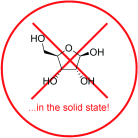
Better late than never! The β-furanose form of D-ribose, present in countless biomolecules, does not occur in the crystalline compound. X-ray diffraction and NMR experiments show that D-ribose occurs in two crystal forms that contain β- and α-pyranose forms in various ratios.
[Communication]
Dubravka Šišak, Lynne B. McCusker, Giorgia Zandomeneghi, Beat H. Meier,
Dieter Bläser, Roland Boese, W. Bernd Schweizer, Ryan Gilmour, Jack D.
Dunitz
Angew. Chem. Int. Ed., May 12, 2010, DOI: 10.1002/anie.201001266. Read article.
Chiral Nanoscale Metal–Organic Tetrahedral Cages: Diastereoselective Self-Assembly and Enantioselective Separation
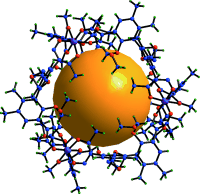
Cage rage: Chiral tetrahedral cages are diastereoselectively self-assembled from enantiopure C2-symmetric biphenyl bis(β-diketonate) linkers and C3-symmetric octahedral Fe3+ or Ga3+ ions (see picture; Fe purple, C blue, O red; cavity shown as an orange sphere). The porous polyhedra exhibit metal-dependent chiroptical behavior and act as hosts for the crystallization separation of racemic alcohols with up to 99.5 % ee.
[Communication]
Taifeng LiuYan LiuWeimin Xuan, Yong Cui
Angew. Chem. Int. Ed. 2010, 49, No. 24, 4121. Read article.
Pentalysine β-Carbonylphthalocyanine Zinc: An Effective Tumor-Targeting Photosensitizer for Photodynamic Therapy
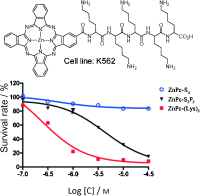
A new unsymmetrical zinc phthalocyanine photosensitizer (pentalysine β-carbonylphthalocyanine zinc, ZnPc-(Lys)5) was prepared in large quantity and high purity. This water-soluble cationic photosensitizer shows high tumor phototoxicity and significant inhibition of tumor growth.
[Full Paper]
Zhuo ChenShanyong ZhouJincan Chen, Yicai Deng, Zhipu Luo, Hongwei Chen, Michael R. Hamblin, Mingdong Huang
ChemMedChem 2010, 5, No. 6, 890. Read article.
Photocatalytic Oxidation of Phenolic Compounds by Using a Carbon Nanotube-Titanium Dioxide Composite Catalyst
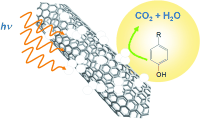
A multiwalled carbon nanotube-titanium dioxide catalyst produced by a sol–gel method shows a high activity in the photocatalytic degradation of para-substituted phenols containing electron-donating groups. A synergetic effect is ascribed to the action of the carbon nanotubes as sensitizers, injecting electrons in the conduction band of the semiconductor, thereby increasing the efficiency of the photocatalytic process.
[Article]
Cláudia Gomes Silva, Joaquim Luís Faria
ChemSusChem 2010, 3, No. 5, 609. Read article.
Analytical Applications of Enzymatic Growth of Quantum Dots
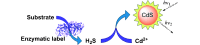
Dot products: We have developed two analytical assays for enzymatic activity based on the generation of quantum dots from enzymatic products. These assays were applied to the detection of acetylcholine esterase and alkaline phosphatase. These enzymes induce the formation of H2S, which in the presence of cadmium cations yields CdS quantum dots.
[Full Paper]
Laura Saa, Ana Virel, Jose Sanchez-Lopez, Valery Pavlov
Chem. Eur. J. 2010, 16, No. 21, 6187. Read article.
Electron Localization Dynamics in the Triplet Excited State of [Ru(bpy)3]2+ in Aqueous Solution
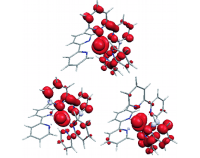
Electrons that can leap frog! A solvent-induced breaking of the coordination symmetry with consequent localization of the photoexcited electron on one or two bipyridine units in [Ru(bpy)3]2+ is reported (bpy=2,2'-bipyridine; see figure). Frequent electronic “hops” between these “pairs” of ligands are observed with a characteristic time of approximately half a picosecond.
[Full Paper]
Marc-Etienne Moret, Ivano Tavernelli, Majed Chergui, Ursula Rothlisberger
Chem. Eur. J. 2010, 16, No. 20, 5889. Read article.
Gene Therapy in HIV-Infected Cells to Decrease Viral Impact by Using an Alternative Delivery Method
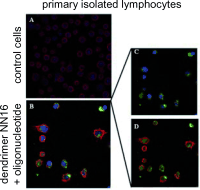
The NN16 dendrimer is capable of transfecting genetic material to a wide array of cell types crucial for HIV infection, thereby resulting in low cytotoxicity. We monitored the cellular uptake of oligonucleotides transfected via NN16, identifying it as an efficient vector in gene therapy by its significant reduction of HIV protein release and specific inhibition of gene expression in HIV-infected cells.
[Full Paper]
Teresa GonzaloMaria Isabel ClementeLouis Chonco, Nick D. Weber, Laura
Díaz, María Jesús Serramía, Rafael Gras, Paula Ortega, F. Javier de la
Mata, Rafael Gómez, Luis A. Lopez-Fernández, Maria Angeles
Muñoz-Fernández, José Luís Jiménez
ChemMedChem 2010, 5, No. 6, 921. Read article.
A Straightforward Preparation of Aminoglycoside–Dinucleotide and –diPNA Conjugates via Click Ligation Assisted by Microwaves
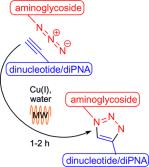
Here, we report on an alternative procedure to prepare aminoglycoside–dinucleotide and –diPNA conjugates which combines copper-catalyzed Huisgen azide-alkyne cycloaddition with microwave irradiation (MW).
[Full Paper]
Javier Alguacil, Sira Defaus, Ana Claudio, Alejandro Trapote, Marta Masides, Jordi Robles
Eur. J. Org. Chem. 2010, No. 16, 3102. Read article.
Reversible Thermally and Photoinduced Electron Transfer in a Cyano-Bridged {Fe2Co2} Square Complex
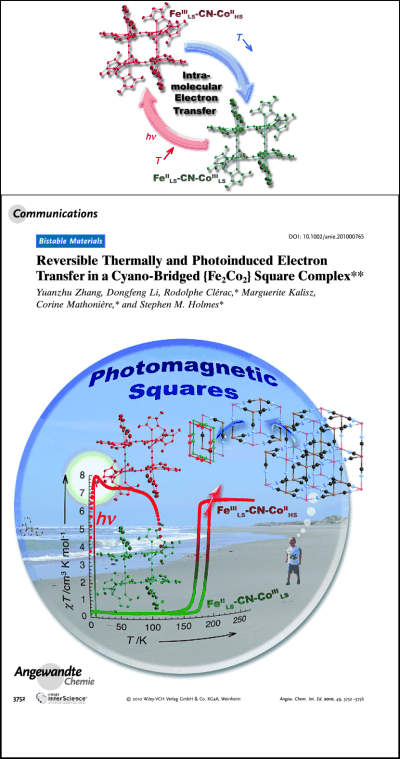
Flip to be square: Structural, spectroscopic, magnetic, and photomagnetic studies conclusively demonstrate that a tetranuclear cyanometalate {Fe2Co2} complex undergoes reversible thermally and light-induced changes in its optical and magnetic properties. This bistability is induced by an intramolecular electron transfer, as observed in three-dimensional Co/Fe Prussian blue compounds (see picture).
[Communication]
Yuanzhu Zhang, Dongfeng Li, Rodolphe Clérac, Marguerite Kalisz, Corine Mathonière, Stephen M. Holmes
Angew. Chem. Int. Ed. 2010, 49, No. 22, 3752. Read article.
A “Clickable” Hybrid Nanocluster of Cubic Symmetry
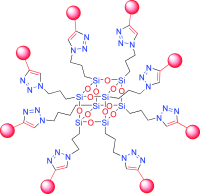
Platonic scaffold: Octa(azidopropyl) cube-octameric silsesquioxane is a versatile scaffold for uniform eightfold symmetric decoration by efficient Huisgen-type 1,3-dipolar cycloaddition under both thermal and CuI-catalyzed conditions (see scheme). Applications are demonstrated for the formation of glycoclusters, as well as an entry to dendrimer synthesis by functional azide-to-alkyne reversion with implicit doubling to sixteenfold attachment sites.
[Communication]
Dirk Heyl, Eckhard Rikowski, Rudolf C. Hoffmann, Jörg J. Schneider, Wolf-Dieter Fessner
Chem. Eur. J. 2010, 16, No. 19, 5544. Read article.
Synthesis and in vitro Anticancer Activity of Octahedral Platinum(IV) Complexes with Cyclohexyl-Functionalized Ethylenediamine-N,N'-Diacetate-Type Ligands
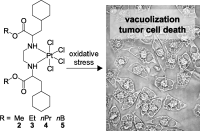
Octahedral PtIV complexes with cyclohexyl group functionalized edda-type ligands kill tumor cells via oxidative stress-mediated caspase-independent necrosis-like cell death associated with massive cytoplasmic vacuolization.
[Full Paper]
Jelena M. LazićLjubica VučićevićSanja Grgurić-Šipka, Kristina
Janjetović, Goran N. Kaluđerović, Maja Misirkić, Maja
Gruden-Pavlović, Dušan Popadić, Reinhard Paschke, Vladimir Trajković,
Tibor J. Sabo
ChemMedChem 2010, 5, No. 6, 881. Read article.
Effect of Pore Structure on the Nitridation of Mesoporous Silica with Ammonia
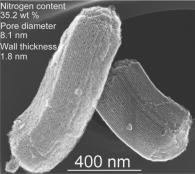
Mesoporous silicon (oxy)nitrides withregular pore structures were prepared by nitridation of mesoporous silica MCM-41, SBA-15, and MCM-48 with ammonia. The nitrogen contents were 35–39 wt.-%. The reaction rates were dependent on the surface areas. Characterization revealed no collapse of the regular pore structure through the nitridation.
[Full Paper]
Fumitaka Hayashi, Ken-ichi Ishizu, Masakazu Iwamoto
Eur. J. Inorg. Chem. 2010, No. 15, 2235. Read article.
Strategies for the Inhibition of Protein Aggregation in Human Diseases
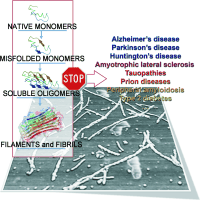
Folding correctly: Protein aggregation diseases are human disorders characterized by aberrant formation of protein aggregates for which no effective disease-modifying treatment is currently available. Recent advances in understanding of pathological mechanisms have launched an increasing number of new rational strategies for drug discovery.
[Review]
Manuela Bartolini, Vincenza Andrisano
ChemBioChem 2010, 11, No. 8, 1018. Read article.
The Catalytic Conversion of Thiophenes over Large H-ZSM-5 Crystals: An X-Ray, UV/Vis, and Fluorescence Microspectroscopic Study
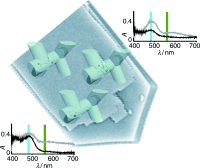
Inner visions: Thiophene derivatives are chemically imaged during acid-catalyzed conversion within the micropores of individual coffin-shaped H-ZSM-5 zeolite crystals by X-ray absorption, UV/Vis, and confocal fluorescence microspectroscopy. A thiophene sulfur atom is found to be in a close proximity to two oxygen framework atoms and the reaction products are aligned within the straight pores of H-ZSM-5.
[Full Paper]
Marianne H. F. Kox, Ana Mijovilovich, Jesper J. H. B. Sättler, Eli Stavitski, Bert M. Weckhuysen
ChemCatChem 2010, 2, No. 5, 564. Read article.
Cell-Cycle Markers and Biosensors
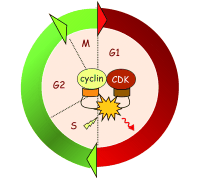
Seeing signals: Characterisation of the cell-cycle status in eukaryotic cells is essential to determine the impact of physiological and pathological signals. This review describes classical approaches that rely on cell fixation, and more recent approaches based on fluorescent markers and biosensors to probe cell-cycle regulators in living cells.
[Minireview]
Laetitia Kurzawa, May C. Morris
ChemBioChem 2010, 11, No. 8, 1037. Read article.
The Future of Aminoglycosides: The End or Renaissance?
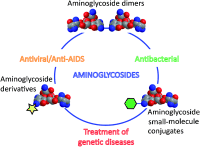
Microbes, HALT! Since the 1940s toxicity, resistance, and complex chemical syntheses have been associated with the use of aminoglycosides as antibacterials and antivirals. However, aminoglycosides have regrouped and are ready for a rematch. We present an overview of the problems and the new developments they have in their arsenal for combat.
[Review]
Jacob L. Houghton , Keith D. Green, Wenjing Chen , Sylvie Garneau-Tsodikova
ChemBioChem 2010, 11, No. 7, 880. Read article.
Perfluoroisopropyl Zinc Phthalocyanines Conjugated with Deoxyribonucleosides: Synthesis, Photophysical Properties and In Vitro Photodynamic Activities
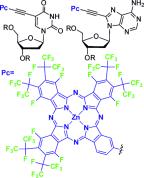
Deoxyribonucleoside-appended perfluoroisopropyl-substituted zinc phthalocyanines have been efficiently synthesized. Photophysical investigations and preliminary biological experiments with the conjugates have revealed interesting properties that make them suitable for use in the photodynamic therapy of cancer.
[Full Paper]
Banibrata Das, Etsuko Tokunaga, Motohiro Tanaka, Takuma Sasaki, Norio Shibata
Eur. J. Org. Chem. 2010, No. 15, 2878. Read article.
A Scaffold-Tree-Merging Strategy for Prospective Bioactivity Annotation of γ-Pyrones
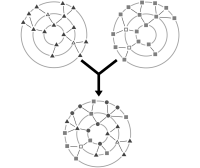
Tactical target setting: The merging of natural product and non-natural product based hierarchical scaffold trees annotated with bioactivity (see schematic illustration) together with brachiation along structural lines of biological relevance provides a novel strategy for the prospective identification of protein targets for compound collections inspired by natural product structures.
[Communication]
Stefan WetzelWolfram WilkSamy Chammaa, Bianca Sperl, Anke G. Roth,
Aybike Yektaoglu, Steffen Renner, Thorsten Berg, Christoph Arenz,
Athanassios Giannis, Tudor I. Oprea, Daniel Rauh, Markus Kaiser,
Herbert Waldmann
Angew. Chem. Int. Ed. 2010, 49, No. 21, 3666. Read article.
When Organocatalysis Meets Transition-Metal Catalysis

The fast development of organocatalysis has significantly enriched the field oforganic synthesis. Recent success in combining transition metal complexes withorganocatalysis has led to the emergence of a promising new direction with potential discoveries of new reactivity patterns and novel synthetic strategies.
[Microreview]
Cheng Zhong, Xiaodong Shi
Eur. J. Org. Chem. 2010, No. 16, 2999. Read article.
Heptahapticity in Binuclear (Cycloheptatrienyl)molybdenum Carbonyl Derivatives: The Interplay between Ring Hapticity/Planarity and Metal–Metal Multiple Bonding
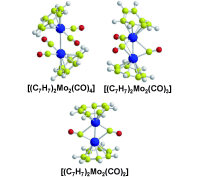
A worthy competitor: Theoretical studies on [(C7H7)2Mo2(CO)n] (see figure) indicate structures with fully bonded heptahapto C7H7 rings and four or fewer carbonyl groups to be energetically competitive, contrary to their chromium analogues. The lowest-energy structures for the carbonyl-richer systems (n=6, 5) contain one trihapto and one pentahapto C7H7 ring.
[Full Paper]
Xuejun Feng, Chanyuan Xie, Yaoming Xie, R. Bruce King, Henry F. Schaefer, III
Chem. Asian J. 2010, 5, No. 5, 1192. Read article.
DNA-Encoded Chemical Libraries: A Tool for Drug Discovery and for Chemical Biology
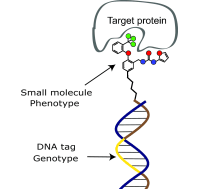
DNA decoder: The collection of organic molecules, individually coupled to distinctive oligonucleotides, is generally referred to as “DNA-encoded chemical library”. In full analogy to phage display technology, these libraries can be panned on immobilized target proteins and analyzed (before and after selection) by suitable “decoding” methods (for example, DNA-sequencing).
[Minireview]
Jörg Scheuermann, Dario Neri
ChemBioChem 2010, 11, No. 7, 931. Read article.
Olefin Epoxidation with a New Class of Ansa-Molybdenum Catalysts in Ionic Liquids
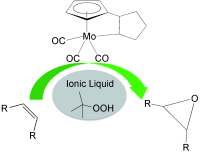
Is that a final ansa? Different room temperature ionic liquids (RTILs) are examined as solvents in the biphasic epoxidation of selected olefins with the ansa compounds 1 and 2 as catalyst precursors. Turnover frequencies of up to 44 000 h−1 are reached and the catalyst can easily be separated and recycled.
[Communication]
Daniel Betz, Alexander Raith, Mirza Cokoja, Fritz E. Kühn
ChemSusChem 2010, 3, No. 5, 559. Read article.
Methyltrioxorhenium Catalysis in Nonconventional Solvents: A Great Catalyst in a Safe Reaction Medium
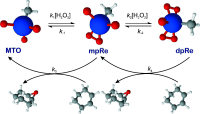
Oxyfunctionalization reactions with methyltrioxorhenium (MTO), one of the most-studied organometallic rhenium derivatives, are the subject of this Review. A detailed account is given of the catalytic activity and selectivity of MTO in nonconventional solvents or under solvent-free conditions, using H2O2 or urea-hydrogen peroxide complex as primary oxidants.
[Review]
Marcello Crucianelli, Raffaele Saladino, Francesco De Angelis
ChemSusChem 2010, 3, No. 5, 524. Read article.
Artificial Metalloenzymes
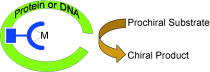
The best of both worlds: Artificial metalloenzymes have emerged as a promising approach to merge the attractive properties of homogeneous and biocatalysis. In this Review, the design and optimization strategies and the catalytic scope of artificial metalloenzymes are discussed, with a particular focus on the role of the second coordination sphere.
[Review]
Fiora Rosati, Gerard Roelfes
ChemCatChem, April 8, 2010, DOI: 10.1002/cctc.201000011. Read article.
The Diversity of Electron-Transport Behaviors of Molecular Junctions: Correlation with the Electron-Transport Pathway
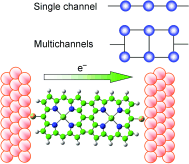
The length–conductivity relations of conjugated molecules are diverse—and they are dominated by the electron-transport pathway (see picture). In the case of a single channel, the conductance decays rapidly with the length and follows an exponential law. However, when the molecular wires have multichannels, the decay of conductance does not follow the exponential relation.
[Article]
Hongmei Liu, Cui Yu, Nengyue Gao, Jianwei Zhao
ChemPhysChem, April 8, 2010, DOI: 10.1002/cphc.201000092. Read article.
Liquid-Phase Chemical Hydrogen Storage: Catalytic Hydrogen Generation under Ambient Conditions

The search for applicable hydrogen storage materials is extremely important owing to the diversified merits of hydrogen energy. Lithium and sodium borohydride (aq.), ammonia borane (aq.), hydrous hydrazine, and formic acid have been extensively investigated as promising hydrogen storage materials based on their relatively high hydrogen content. In this Minireview we briefly survey the research progresses in catalytic hydrogen generation from these liquid-phase chemical hydrogen storage materials.
[Minireview]
Hai-Long Jiang Sanjay Kumar Singh Jun-Min Yan Xin-Bo Zhang, Qiang Xu
ChemSusChem 2010, 3, No. 5, 541. Read article.
Equilibrium Studies on the Gd3+, Cu2+ and Zn2+ Complexes of BOPTA, DTPA and DTPA-BMA Ligands: Kinetics of Metal-Exchange Reactions of [Gd(BOPTA)]2–
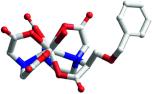
On the basis of the stability constants determined in 0.15 M NaCl, the selectivity of ligands derived from DTPA for GdIII over ZnII follows the order BOPTA > DTPA > DTPA-BMA. The rates of metal-exchange reactions of [Gd(BOPTA)]2– with CuII, ZnII, and EuIII are 30–90 % lower thanthe rates of similar reactions with [Gd(DTPA)]2–.
[Full Paper]
Zsolt Baranyai, Zoltán Pálinkás, Fulvio Uggeri, Ernő Brücher
Eur. J. Inorg. Chem. 2010, No. 13, 1948. Read article.
Sonication-Assisted Fabrication and Post-Synthetic Modifications of Graphene-Like Materials
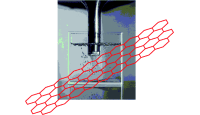
Sound—action! Inexpensive graphitic precursors can be transformed into invaluable graphenes (both single and few layers) using ultrasonication as the key step. This safe wet chemistry enables rapid dispersion and formation of stable colloids (see figure). This minireview unveils the rich and sound science behind the lab trick.
[Minireview]
Giancarlo Cravotto, Pedro Cintas
Chem. Eur. J. 2010, 16, No. 18, 5246. Read article.
Synthesis and Biological Characterization of Argyrin F
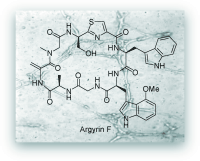
Argyrin F unfolds its promising antitumor activity twice: First through stabilization of the tumor suppressor protein p27 and second by vascular damage.
[Communication]
Leila Bülow, Irina Nickeleit, Anna-Katharina Girbig, Tobias Brodmann,
Andreas Rentsch, Ulrike Eggert, Florenz Sasse, Heinrich Steinmetz,
Ronald Frank, Teresa Carlomagno, Nisar P. Malek, Markus Kalesse
ChemMedChem 2010, 5, No. 6, 832. Read article.
Site-Selective Ser-Hydrolase Labelling with a Luminescent Organometallic NCN–Platinum Complex
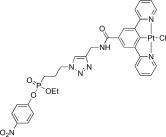
A novel luminescent organometallic label consisting of a NCN–platinum complex attached to a phosphonate has been synthesized and tested in the labelling of serine hydrolases. The site-selective dye proved to be a photostable dye suitable for gel-electrophoresis studies.
[Full Paper]
Birgit Wieczorek, Bart Lemcke, Harm P. Dijkstra, Maarten R. Egmond, Robertus J. M. Klein Gebbink, Gerard van Koten
Eur. J. Inorg. Chem. 2010, No. 13, 1929. Read article.
On the Compatibility Criteria for Protein Encapsulation inside Mesoporous Materials
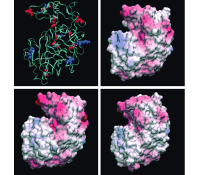
Compatible partners: A modelling study provides insight into the properties relevant for enzyme encapsulation inside mesoporous silica materials. Pepsin is negatively charged but its surface presents both positive and negative patches (see picture). Its structure has a significant rigidity and stability combined with atomic-scale flexibility. These factors could contribute to the production of bioinorganic hybrids.
[Article]
Lara Giussani, Ettore Fois, Enrica Gianotti, Gloria Tabacchi, Aldo Gamba, Salvatore Coluccia
ChemPhysChem 2010, 11, No. 8, 1757. Read article.
Direct Measure of the Tilt Angle in de Vries-Type Liquid Crystals through NMR Spectroscopy
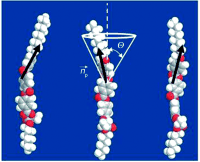
Around the bend: Deuterium NMR measurements at different magnetic fields confirms the occurrence of a tilt of the aromatic core of a de Vries liquid crystal smectogen in its SmA phase (see picture).
[Communication]
Alessandro Marchetti, Valentina Domenici, Vladimira Novotna, Moreno Lelli, Mario Cifelli, Anne Lesage, Carlo A. Veracini
ChemPhysChem 2010, 11, No. 8, 1641. Read article.
BODIPY-Tetrazine Multichromophoric Derivatives
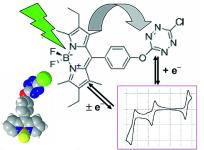
The photophysical, electrochemical and spectroelectrochemical properties of new BODIPY-tetrazine dyads have been investigated. As expected, these dyes have very low fluorescence yields due mainly to intramolecular energy transfer between the BODIPY chromophore and the tetrazine moiety.
[Full Paper]
Cécile Dumas-Verdes, Fabien Miomandre, Eve Lépicier, Olivier Galangau,
Thanh Truc Vu, Gilles Clavier, Rachel Méallet-Renault, Pierre Audebert
Eur. J. Org. Chem. 2010, No. 13, 2525. Read article.
Aptamer–Target Binding Triggered Molecular Mediation of Singlet Oxygen Generation
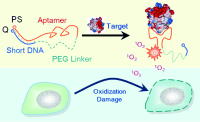
Molecular mediation of singlet oxygen generation is demonstrated based on a newly engineered aptamer probe. Both ATP and human α-thrombin aptamers were engineered to testify to this design, and both showed that the production of singlet oxygen can be triggered and quantitatively mediated by the presence of target molecules. Moreover, both photosensitizer aptamer switch (PAS) probes showed excellent selectivity toward their targets. These results suggest that a PAS can serve as a smart photodynamic therapy agent.
[Communication]
Zhiwen Tang, Zhi Zhu, Prabodhika Mallikaratchy, Ronghua Yang, Kwame Sefah, Weihong Tan
Chem. Asian J. 2010, 5, No. 4, 783. Read article.
Controlled Preparation of Inorganic Nanostructures on Substrates by Dip-Pen Nanolithography
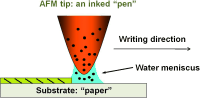
Dip-pen nanolithography (DPN) can be used as a feasible technique for the fabrication of various inorganic nanostructures on substrates with nanometer-scaled resolution. The high registration and great flexibility in shape and location control make it unique and powerful. This atomic force microscopy based technique also offers convenience for in situ characterization of the obtained nanostructures. This Focus Review summarizes the challenges and progress in preparing inorganic nanostructures with DPN.
[Focus Review]
Yan Li, Hao Sun, Haibin Chu
Chem. Asian J. 2010, 5, No. 5, 980. Read article.
Photocurrent Generation by Polymeric Carbon Nitride Solids: An Initial Step towards a Novel Photovoltaic System
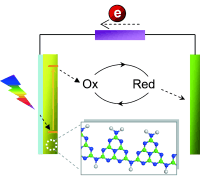
Polymeric carbon nitride, which is cheap, amenable to mass preparation and chemical modification, and highly stable against oxidation up to 550 °C in air, has been exemplified to be potentially promising as a photoactive material in directly converting solar light into electricity. It would not only strengthen the emerging applications of the kaleidoscopic carbon nitride solids, but also contribute to a more open discussion in photovoltaics.
[Communication]
Yuanjian Zhang, Markus Antonietti
Chem. Asian J. 2010, 5, No. 6, 1307. Read article.
Synthesis, Structures, and Magnetic Properties of N-Trialkylsilyl-8-amidoquinoline Complexes of Chromium, Manganese, Iron, and Cobalt as well as of Wheel-Like Hexanuclear Iron(II) and Manganese(II) Bis(8-amidoquinoline)
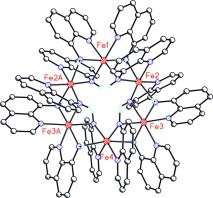
The 8-amidoquinoline complexes of FeII and MnII form hexanuclear wheels. Surprisingly, the magnetic properties differ: the FeII complex is ferromagnetic, whereas the MnII wheel shows an antiferromagnetic coupling. In contrast to these cage compounds, the CoII complex is a mononuclear compound.
[Full Paper]
Astrid Malassa, Christine Agthe, Helmar Görls, Maren Podewitz, Lian Yu, Carmen Herrmann, Markus Reiher, Matthias Westerhausen
Eur. J. Inorg. Chem. 2010, No. 12, 1777. Read article.
Autoreduction and Catalytic Performance of a Cobalt Fischer–Tropsch Synthesis Catalyst Supported on Nitrogen-Doped Carbon Spheres
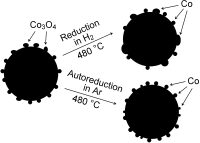
Cobalt oxide supported on N-CSs (ca. 700 nm), prepared by deposition precipitation and autoreduced by the carbon supports, gives good performance as a catalyst for Fischer–Tropsch synthesis, better than that achieved by similar catalysts reduced with hydrogen. This effect is related to the trapping of the cobalt in cavities on the eroded carbon surface.
[Communication]
Haifeng Xiong, Mahluli Moyo, Matthew K. Rayner, Linda L. Jewell, David G. Billing, Neil J. Coville
ChemCatChem 2010, 2, No. 5, 514. Read article.
Gold-Catalyzed Cross-Couplings: New Opportunities for C-C Bond Formation
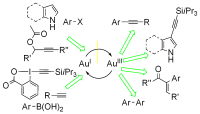
From C to shining C: The fast-expanding field of gold catalysis has recently been extended to cross-couplings, including Suzuki and Sonogashira reactions. From the AuI/AuIII redox couple to the development of tandem routes, gold exhibits an impressive potential for cross-coupling reactions. The combination of gold with palladium gives rise to yet further synthetic opportunities.
[Minireview]
Pierre Garcia, Max Malacria, Corinne Aubert, Vincent Gandon, Louis Fensterbank
ChemCatChem 2010, 2, No. 5, 493. Read article.
In Situ Video-STM Studies of Adsorbate Dynamics at Electrochemical Interfaces
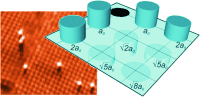
Viewing atomic interactions: The motion of sulfur atoms, adsorbed on Cu(100) electrodes in HCl solution, has been followed by in situ video-rate STM (see picture). These measurements provide direct data on the adsorbate-adsorbate and adsorbate-substrate interactions of species at electrochemical interfaces.
[Article]
Tunay Tansel, Andriy Taranovskyy, Olaf M. Magnussen
ChemPhysChem 2010, 11, No. 7, 1438. Read article.